
10 Tips for a Successful Live Stream of an Amateur Sports Game
In today’s digital world, live streaming sports is no longer reserved for professional leagues. Whether...


Should we stream our game on Facebook or YouTube?
Both platforms are free. Both allow live video. Both are popular. But when it comes to sports streaming—especially amateur and youth sports—the differences matter more than you might think.
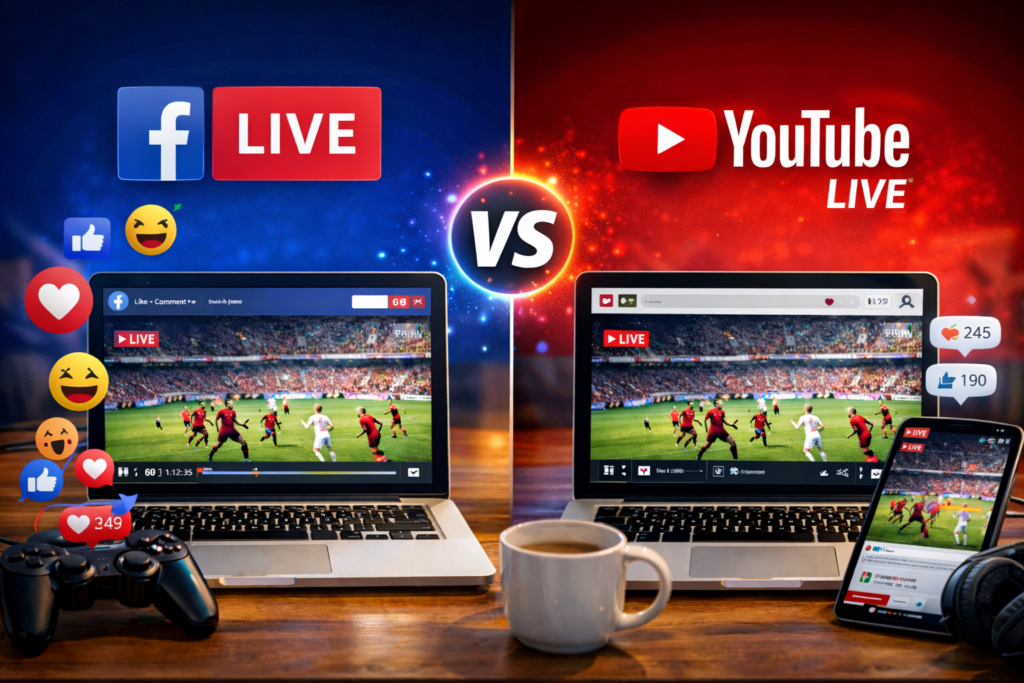
In this guide, we’ll compare Facebook Live and YouTube Live specifically for sports streaming, using simple language and real-life examples.
Professional teams have media departments and broadcast contracts. Youth teams don’t.
Most amateur sports streams are run by:
That means the platform must be:
A complicated setup or hidden link can reduce viewers—even if the stream quality is good.
Let’s start with Facebook Live.
For many parents, Facebook is already part of daily life. That familiarity makes it an attractive option.
If your audience is mostly:
Facebook can feel very natural.
A youth soccer team shares its stream link inside a private parents’ Facebook group. Everyone sees it immediately. Engagement is high. Comments and reactions create a sense of shared experience.
However, there are some challenges:
If your goal is long-term growth or reaching people outside your immediate circle, this can be restrictive.
Now let’s look at YouTube Live.
YouTube is built for video. That gives it several advantages for sports streaming.
If your club wants to:
YouTube has clear strengths.
A small basketball club streams weekly games on YouTube. Over time, their channel grows. Former players, relatives abroad, and new families discover the club through search.
That kind of organic visibility is harder to achieve on Facebook.
YouTube isn’t perfect either:
However, once set up properly, YouTube is very stable and structured.
Here’s a simple breakdown for sports live streaming:
Winner for simplicity: Facebook
Winner for structured setup: YouTube
If you mainly stream for families → Facebook works well.
If you want long-term growth → YouTube is stronger.
For teams that want to:
YouTube is clearly better.
If someone searches:
“Youth football match highlights”
YouTube gives your team a chance to appear.
Facebook feels more like a shared living room.
YouTube feels more like a broadcast channel.
There is no universal answer. It depends on your goal.
Some clubs choose to stream to both platforms.
This allows:
Using a sports streaming app like StreamMySport makes it easier to manage streaming to platforms like YouTube or Facebook without complicated technical setups. The focus stays on the game—not the technology.
If you’re unsure, ask yourself three questions:
If you stream:
Is YouTube better than Facebook for sports streaming?
It depends. YouTube is better for long-term visibility and archives. Facebook is better for immediate parent engagement.
Can I stream youth sports on Facebook Live for free?
Yes. Both platforms are free to use for live streaming.
Does YouTube Live save the stream automatically?
Yes, streams are automatically archived unless you disable the option.
Which platform gets more viewers for local games?
For small local communities, Facebook groups often generate faster engagement.
Can I switch platforms later?
Yes. Many teams start on Facebook and later expand to YouTube as their audience grows.
When comparing Facebook Live vs YouTube Live for sports streaming, the right choice depends on your goals.
Both can work well for amateur and youth sports. The most important step is to start streaming consistently and make it easy for families to watch.
If you’re evaluating your options, explore how different platforms fit your team’s needs—and see how StreamMySport works to simplify the entire live streaming process for parents and coaches.

We'd love to hear from you!
Have a question about StreamMySport, need help with the app, or simply want to say hello? We're always happy to hear from you!
Whether you're looking for technical support, have an idea for a new feature, or want to explore a potential partnership, our team is here to help.
We're also excited to connect with sports clubs, tournament organizers, schools, and content creators who want to bring more sporting moments to life through livestreaming.
Get in touch with us at:
We'll do our best to get back to you as soon as possible.
Let's make sports more accessible, together!
Let’s Contact
We’re opening early access for passionate streamers.
Join the waitlist now and get an exclusive launch discount when the app goes live.
No spam — we’ll notify you once the app is live on Google Play & App Store!
StreamMySport
is Launching Soon!